Walk into a factory floor, a construction site, a logistics hub, or even a hospital, and you immediately enter an environment defined by constant motion, layered systems, and invisible risk. Machines operate in coordination with people. People operate in proximity to each other. And every interaction—planned or unplanned—carries some level of exposure.
In these environments, safety is typically built on structure: protocols, signage, training, compliance frameworks, and supervision. These systems are essential, but they are also fundamentally static. They assume that humans will see, interpret, and respond correctly in real time within complex, fast-moving conditions.
The reality is more nuanced. Most workplace incidents are not the result of a single catastrophic failure—they emerge from small breakdowns in awareness, timing, or context. A missed signal. A moment of distraction. A change in conditions that wasn’t immediately visible. Safety systems today are generally designed to document these events or respond after they occur, rather than understand the conditions that lead up to them.
Wearable technology has begun to change how we think about the human body in these environments. Devices now track physiological signals such as heart rate, fatigue, and movement with increasing precision. In some cases, they can even detect falls or sudden impacts and trigger emergency responses. These capabilities represent meaningful progress—but they remain largely event-based. They respond when something has already crossed a threshold.
What is still missing is environmental awareness.
The next evolution of workplace safety does not come from tracking the worker alone, but from understanding the relationship between the worker and their environment in real time. This means moving beyond isolated signals—such as heart rate or motion—and toward systems that can interpret context.
Imagine a system capable of recognizing that a machine is operating outside normal parameters while a worker is within a defined proximity zone. Or identifying that an individual is moving into a restricted area without the appropriate safety conditions being met. Or detecting subtle physiological changes—such as elevated stress responses—that, when combined with environmental data, suggest increasing risk before a visible incident occurs.
Individually, none of these signals are definitive. But together, they begin to form a pattern. And it is in patterns—not isolated data points—that meaningful awareness emerges.
This is where wearable systems begin to shift from passive monitoring to contextual intelligence.
In high-density operational environments like healthcare, manufacturing, and logistics, this shift is particularly significant. These are not environments where risk is rare—they are environments where risk is constant but managed through structure, training, and human vigilance. However, human attention is finite. Even highly trained professionals operate under cognitive load, time pressure, and environmental complexity.
Research in human factors engineering and cognitive science has long shown that situational awareness degrades under stress and workload. This is not a failure of competence—it is a limitation of human processing capacity. Systems designed around this reality tend to perform more reliably than those that assume perfect attention and interpretation in real time.
Wearable intelligence introduces a new layer into this equation: distributed awareness.
Instead of relying solely on individual perception or post-event reporting, systems can begin to interpret signals continuously across multiple dimensions—physiological, environmental, and behavioral. The result is not surveillance, but structured awareness that supports decision-making before escalation occurs.
In this model, the role of technology changes. It is no longer simply recording compliance or reacting to incidents. It becomes an active layer of interpretation—helping identify when conditions are shifting toward higher risk and enabling earlier, more informed responses.
The implications extend beyond efficiency or compliance metrics. They speak directly to the design of environments where human safety is a constant priority, not an afterthought. In industries where seconds matter, earlier awareness can fundamentally change outcomes—not by replacing human judgment, but by supporting it with contextual intelligence that is otherwise difficult to maintain at scale.
This is where workplace safety begins to evolve.
Not as a set of rules enforced after the fact, but as a continuously responsive system that integrates human behavior, environmental conditions, and real-time interpretation into a unified framework of awareness.
In that future, wearables are not simply devices worn by workers. They become part of the operational fabric of the environment itself—quietly observing, interpreting, and supporting safety without interrupting workflow.
The goal is not more monitoring.
It is earlier understanding.
And in environments where complexity and risk coexist, that shift is not incremental—it is foundational.
Written by: Calum Callahan, Tech Contributor
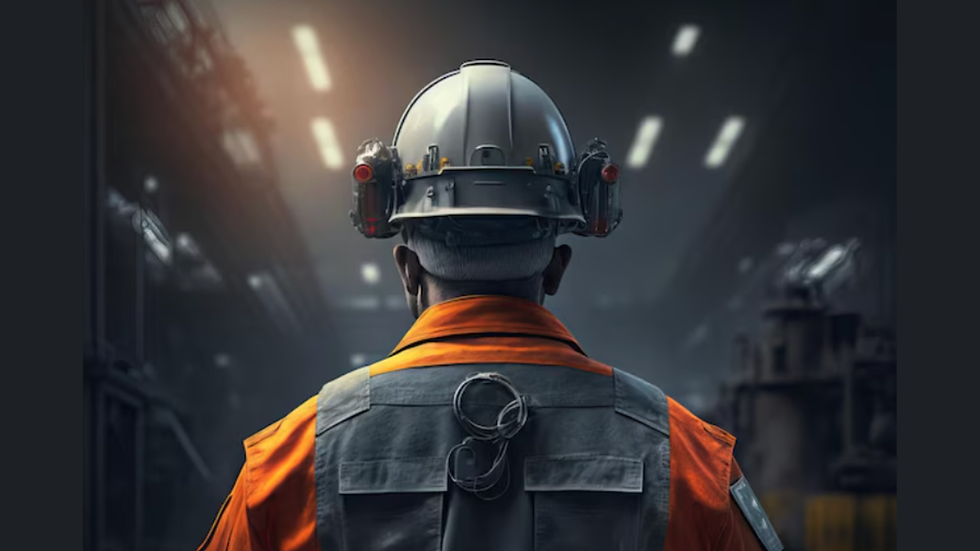
Workplace Safety Reinvented: How Wearable Tech Could Transform Everyday Risk
Mar 3, 2026